
Curriculum Resources
Structured resources for planning, organising and assessing the secondary science curriculum.
Practical tools for working with specifications, curriculum coverage, sequencing, assessment and analysis, making complex curriculum information easier to navigate and use.
Curriculum and assessment resources
Structured resources that support the curriculum and assessment process, from understanding the specification and what is examined to gathering evidence of learning, providing feedback and identifying what happens next.
Teaching Efficiently resources cover the four stages of the curriculum and assessment process.
1. Specifications
Specification comparisons
Paper analysis
2. Gather evidence of learning
Question-level analysis (QLA)
QP-MS Feedback
3. Provide feedback
QP-MS Feedback next steps
Marksheet analysis
Report comments
4. Monitor progress
Quadrants
Specifications
Specification comparisons
Compare secondary science specifications point by point across examination boards.
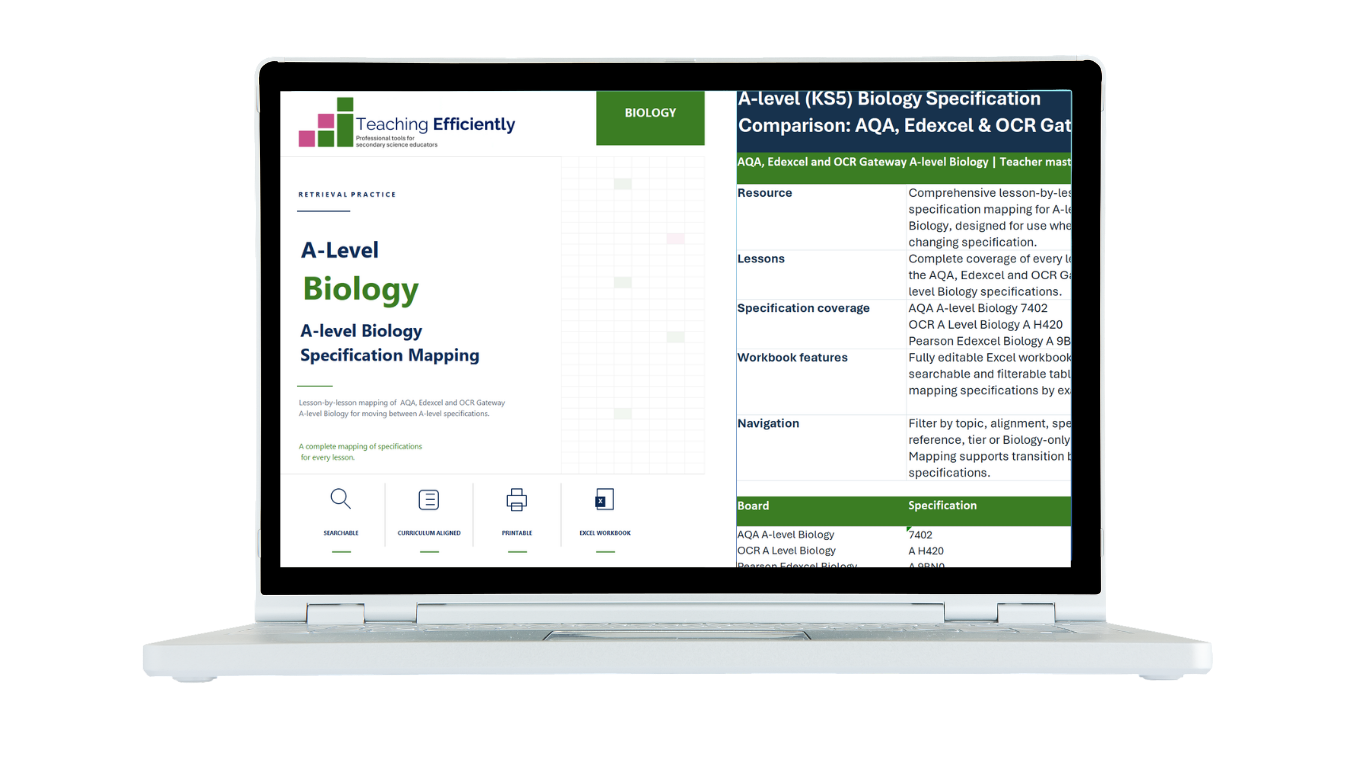
Teaching Efficiently specification comparisons show where specification content is common across AQA, Edexcel and OCR, where requirements are unique to individual examination boards, and how required practicals compare.
For Heads of Science
Compare specifications when reviewing or selecting an examination board and identify the curriculum changes required when moving from one specification to another.
For subject teachers
Identify differences when moving between schools or specifications, support students transferring partway through a key stage, and remap existing teaching resources to a different specification.
Available on TES
Paper analysis
See how examination content and marks are distributed across topics and subtopics over time.
Teaching Efficiently paper analysis resources analyse examination papers by examination board and year, showing the weighting of topics and the distribution of marks across subtopics.
For Heads of Science
Analyse the relative emphasis given to topics and subtopics across examination papers, inform curriculum and resource planning, and identify where teaching, enrichment, skills development or consolidation may need greater emphasis.
For subject teachers
Identify the content assessed in individual papers and cross-check it against the scheme of learning to ensure relevant topics and subtopics have been taught, revised, consolidated and assessed.
Available on TES Autumn 2026
Gather evidence of learning
Question-level analysis (QLA)
See performance question by question and connect results back to the curriculum.
Teaching Efficiently question-level analysis breaks assessment results down by question, topic, subtopic, specification reference and assessment objective, providing a structured view of where learning is secure and where further attention may be needed.
For Heads of Science
Analyse performance across classes and cohorts to identify questions and curriculum areas that were answered well and those that may require reteaching or intervention.
For subject teachers
Enter marks question by question, check totals automatically and identify strengths and development areas that can feed directly into feedback and reporting.
Available on TES Autumn 2026
QP-MS Feedback
Bring the question paper, mark scheme and examiner commentary together question by question.
Teaching Efficiently QP-MS Feedback resources combine each question with the relevant mark scheme and examiner commentary, making the information needed for marking and feedback easier to access and use.
For Heads of Science
Support consistent use of mark schemes, moderation across teachers and the development of subject-specific marking practice.
For subject teachers
Work through questions alongside the mark scheme and examiner commentary, use them directly in feedback sessions and add individual written or audio feedback where appropriate.
Available on TES Autumn 2026
Provide feedback
Student-specific feedback and next steps
Turn assessment evidence into specific, actionable feedback.
Teaching Efficiently feedback resources connect individual questions, answers and examiner feedback with the next steps students need to take.
For Heads of Science
Support consistent feedback across classes, connect common misconceptions with appropriate next steps, and create a more systematic approach to feedback and intervention.
For subject teachers
Direct individual students to the questions and areas requiring attention, with specific feedback and next steps already connected to their assessment performance.
Available on TES Autumn 2026
Marksheet analysis
Bring marks together across classes and cohorts for analysis and reporting.
Teaching Efficiently marksheet analysis consolidates assessment marks by class and tier, supporting comparison, moderation and identification of areas requiring attention.
For Heads of Science
Support grade-boundary setting, moderation across markers and analysis of patterns across classes and cohorts.
For subject teachers
Identify questions or areas where marking may need reviewing and highlight common areas for feedback, consolidation or reteaching.
Available on TES Autumn 2026
Report comments
Turn assessment evidence into consistent, data-informed reporting.
Teaching Efficiently reporting resources use assessment information to support structured report comments, including strengths, development areas and next steps.
For Heads of Science
Improve consistency and completeness of reporting across the department while keeping comments focused on evidence, actions and development.
For subject teachers
Use QLA-identified strengths and development areas to reduce repetitive report writing and connect reporting directly to the actions and next steps already identified through assessment.
Available on TES Autumn 2026
Monitor progress
Quadrants
Turn progress and effort data into clear priorities for action.
Teaching Efficiently progress-monitoring resources combine measures of student progress and effort to classify students into four quadrants, helping make the next action easier to identify.
For Heads of Science
Use a consistent effort-and-progress framework across classes to identify patterns, priorities and groups requiring different types of support or intervention.
For subject teachers
See each student's effort and progress together, identify their quadrant and use that classification to inform future actions and intervention.
Available on TES Autumn 2026
Aspire — High effort | High progress
Ambition — High effort | Low progress
Accelerate — Low effort | High progress
Action — Low effort | Low progress
Get in touch
Have a question about a resource, need help choosing the right one, or have an idea for something you’d like us to develop? Get in touch.