

Teaching Efficiently Biology Resources

Find Biology Resources
Lesson & Classroom Resources
Complete Lessons
Biology GCSE AQA
4.1.1.1 Eukaryotic and prokaryotic cells
4.1.1.2 Animal and plant cells
4.1.1.3 Cell specialisation
4.1.1.4 Cell differentiation
4.1.1.5 Microscopy
4.1.1.6 Culturing microorganisms
4.1.2.1 Chromosomes
4.1.2.2 Mitosis and the cell cycle
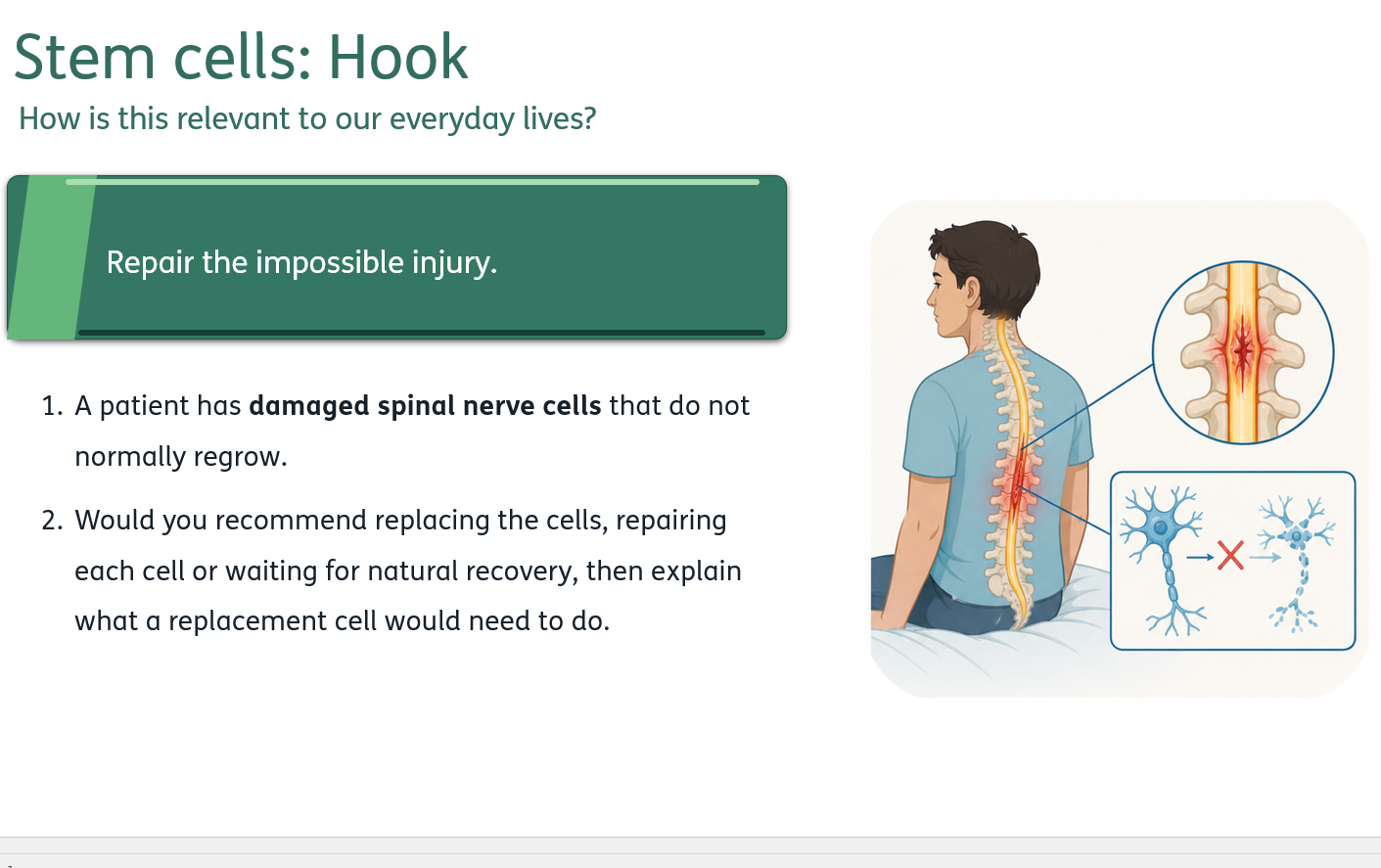
4.1.2.3 Stem cells
4.1.3.1 Diffusion
4.1.3.2 Osmosis
4.1.3.3 Active transport
4.2.1.1 Principles of organisation
4.2.2.1a The human digestive system
4.2.2.1b Food Tests (RP4)
4.2.2.1c Enzymes
4.2.2.1d Enzymes and digestion
4.2.2.1e Investigating enzymes (RP5)
4.2.2.2a The heart, including heart dissection
4.2.2.2b Lung structure
4.2.2.2c Blood vessels
4.2.2.3 The Blood
4.2.2.4 Coronary heart disease
4.2.2.5 Health issues
4.2.2.6 Effect of lifestyle
4.2.2.7 Cancer
4.2.3.1 Plant tissues
4.2.3.2 Plant organ systems
4.3.1.1 Communicable diseases
4.3.1.2 Viral diseases
4.3.1.3 Bacterial diseases
4.3.1.4 Fungal disease
4.3.1.5 Protist diseases
4.3.1.6 Human defence systems
4.3.1.7 Vaccination
4.3.1.8 Antibiotics and painkillers
4.3.1.9 Discovery and development of drugs
4.3.2.1 Producing monoclonal antibodies
4.3.3.1 Detection and identification of plant diseases
4.3.3.2 Plant defence responses
4.4.1.1 Photosynthesis
4.4.1.2 Rate of photosynthesis, including RP6
4.4.1.3 Uses of glucose from photosynthesis
4.4.2.1 Aerobic and anaerobic respiration
4.4.2.2 Response to exercise
4.4.2.3 Metabolism
4.5.1.1 Homeostasis
4.5.2.1 Human nervous system
4.5.2.2 The brain
4.5.2.3 The eye
4.5.2.4 Control of body temperature
4.5.3.1 Human endocrine system
4.5.3.2 Control of blood glucose concentration
4.5.3.3 Water balance, osmoregulation and the kidneys
4.5.3.4 Hormones in human reproduction
4.5.3.5 Contraception
4.5.3.6 The use of hormones to treat infertility
4.5.3.7 Negative feedback
4.5.4.1 Plant hormones
4.5.4.2 Use of plant hormones, including RP8
4.6.1.1 Sexual and asexual reproduction
4.6.1.2 Meiosis
4.6.1.3 Advantages and disadvantages of sexual reproduction
4.6.1.4 DNA and the genome
4.6.1.5 DNA Structure
4.6.1.6 Genetic inheritance
4.6.1.7 Inherited disorders
4.6.1.8 Sex determination
4.6.2.1 Variation
4.6.2.2 Evolution
4.6.2.3 Selective breeding
4.6.2.4 Genetic engineering
4.6.2.5 Cloning
4.6.3.1 Theory of evolution
4.6.3.2 Speciation
4.6.3.3 The understanding of genetics
4.6.3.4 Evidence for evolution
4.6.3.5 Fossils
4.6.3.6 Extinction
4.6.3.7 Resistant bacteria
4.6.4.1 Classification of organisms
4.7.1.1 Communities
4.7.1.2 Abiotic factors
4.7.1.3 Biotic factors
4.7.1.4 Adaptations
4.7.2.1 Levels of organisation, including RP9 Sampling
4.7.2.2 How materials are cycled
4.7.2.3 Decomposition, including RP10 Decay
4.7.2.4 Impact of environmental change
4.7.3.1 Biodiversity
4.7.3.2 Waste management
4.7.3.3 Land use
4.7.3.4 Deforestation
4.7.3.5 Global warming
4.7.3.6 Maintaining biodiversity
4.7.4.1 Trophic levels
4.7.4.2 Pyramids of biomass
4.7.4.3 Transfer of biomass
4.7.5.1 Factors affecting food security
4.7.5.2 Farming techniques
4.7.5.3 Sustainable fisheries
4.7.5.4 Role of biotechnology
Biology KS3 Activate
1.1 Observing cells
1.2 Plant and animal cells
1.3 Specialised cells
1.4 Movement of substances
1.5 Unicellular organisms
Do Now
Biology GCSE AQA
Do Now Questions and Answers – Excel
Do Now Questions and Answers – PowerPoint
Biology KS3 Activate
Do Now Questions and Answers – Excel
Do Now Questions and Answers – PowerPoint
Learning Journeys
Learning Objectives
Biology GCSE AQA
Learning Objectives – Excel
Learning Objectives – PowerPoint
Biology KS3 Activate
Learning Objectives – Excel
Learning Objectives – PowerPoint
Check for Prior Knowledge
Biology GCSE AQA
Check for Prior Knowledge – Excel
Check for Prior Knowledge – PowerPoint
Biology KS3 Activate
Check for Prior Knowledge – Excel
Check for Prior Knowledge – PowerPoint
Discussion
Biology GCSE AQA
Discussion Questions – Excel
Discussion Questions – PowerPoint
Biology KS3 Activate
Discussion Questions
Checks for Understanding
Guided Practice
Independent Practice: Knowledge
Biology GCSE AQA
4.1 Cell Biology Independent Practice
4.2 Organisation – Knowledge Qs and As
4.3 Infection and Response – Independent Practice Qs & As
4.4 Bioenergetics – Independent Practice Qs and As
4.5 Homeostasis and Response – Independent Practice Q&A
4.6 Genetics and Evolution – Independent Practice Q&As
4.7 Ecology – Independent Practice Q&As
Independent Practice: Application
Biology GCSE AQA
4.1 Cell Biology – Application Q&As
4.2 Organisation – Application Questions
4.3 Infection and Response – Application Questions
4.4 Bioenergetics – Application Questions
4.5 Homeostasis – Application Qs & As
4.6 Inheritance – Application Qs and As
4.7 Ecology – Application Qs and As
Hinge Questions
Biology GCSE AQA
Biology GCSE AQA Hinge Questions
Biology KS3 Activate
Activate 1 Hinge Questions
Activate 2 Hinge Questions
Curriculum & Assessment Resources
Specification Knowledge Checklist
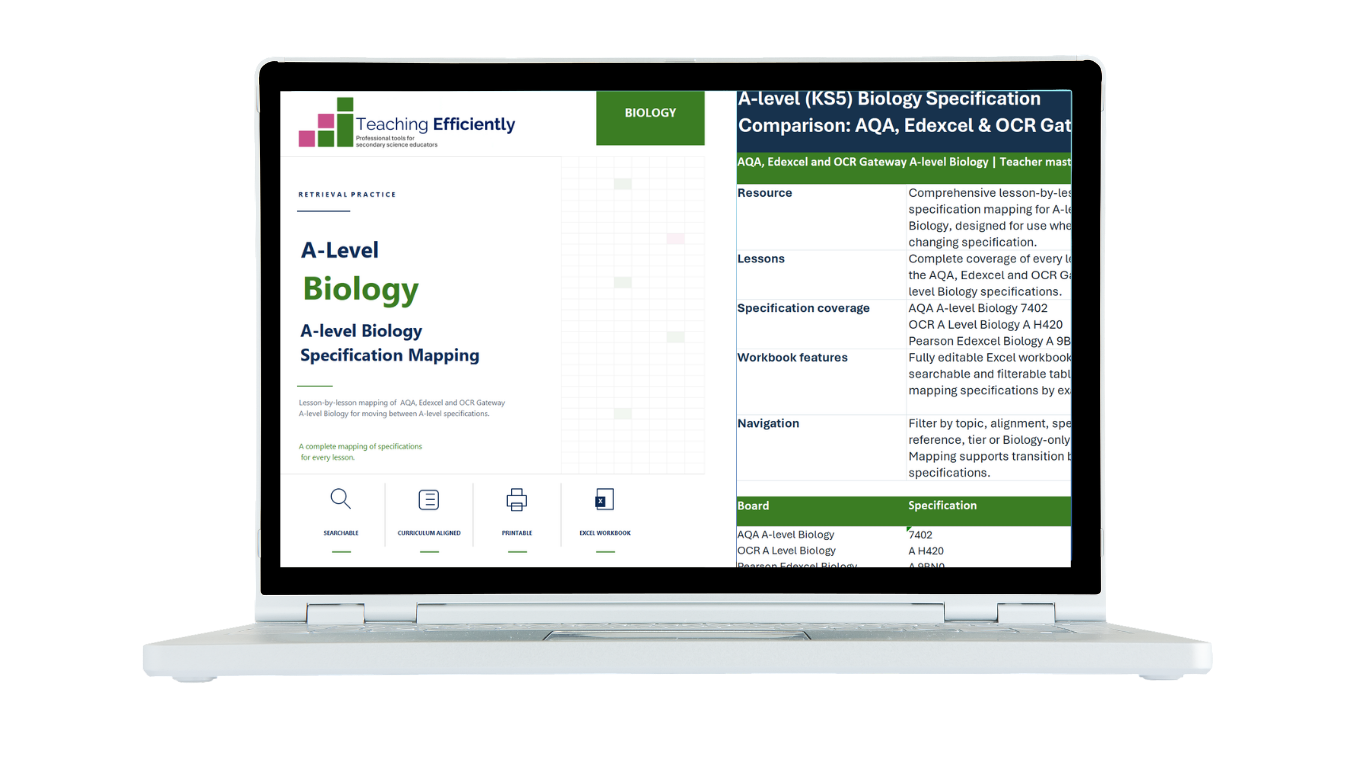
Specification Comparisons
Specification Paper Analysis
QLA Marksheets
Keywords & Definitions
Get in touch
Have a question about a resource, need help choosing the right one, or have an idea for something you’d like us to develop? Get in touch.