
Complete Lessons
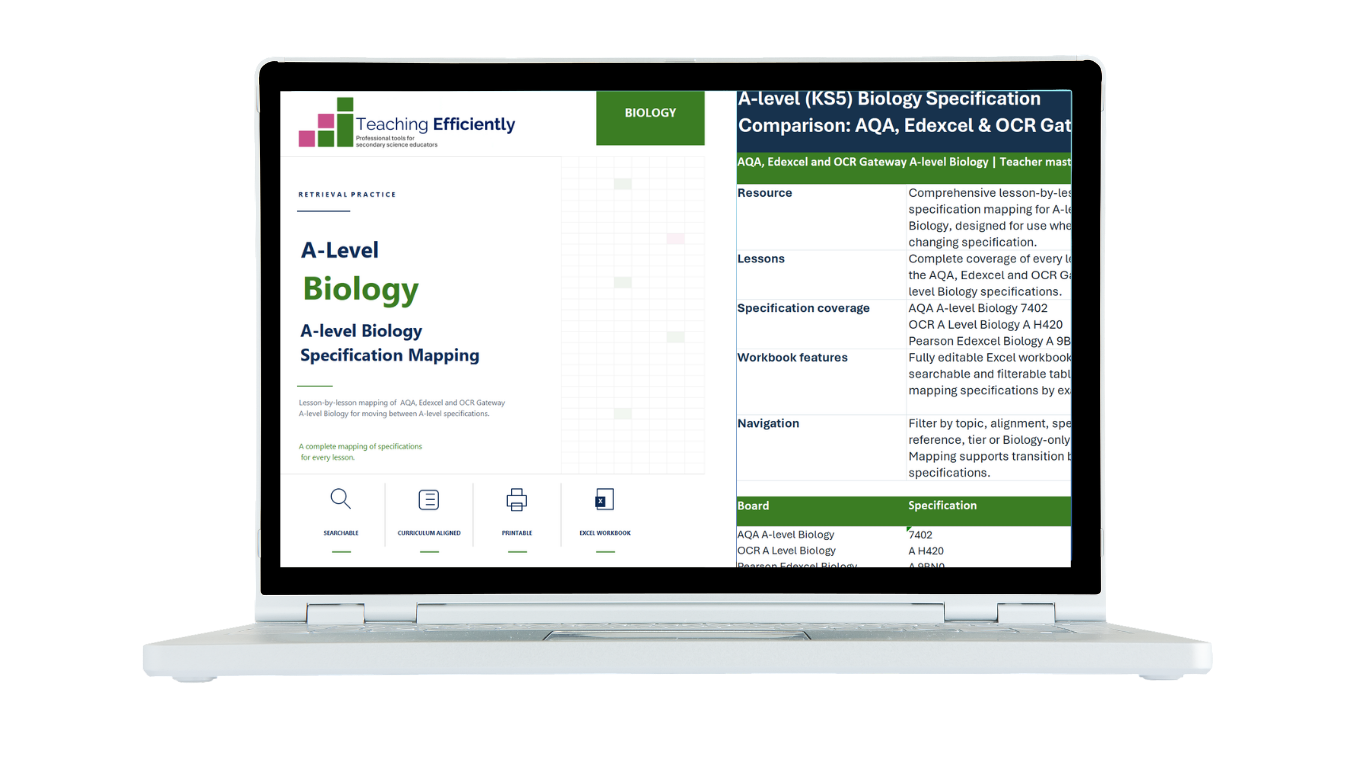
Ready-to-use, fully editable secondary science lessons built from all 14 Teaching Efficiently lesson components.
Designed to be used with minimal prep or fully edited and adapted to integrate with existing class and curriculum approaches.
Find your lessons
Biology GCSE AQA (8461)
4.1 Cell Biology
4.1.1 Cell structure
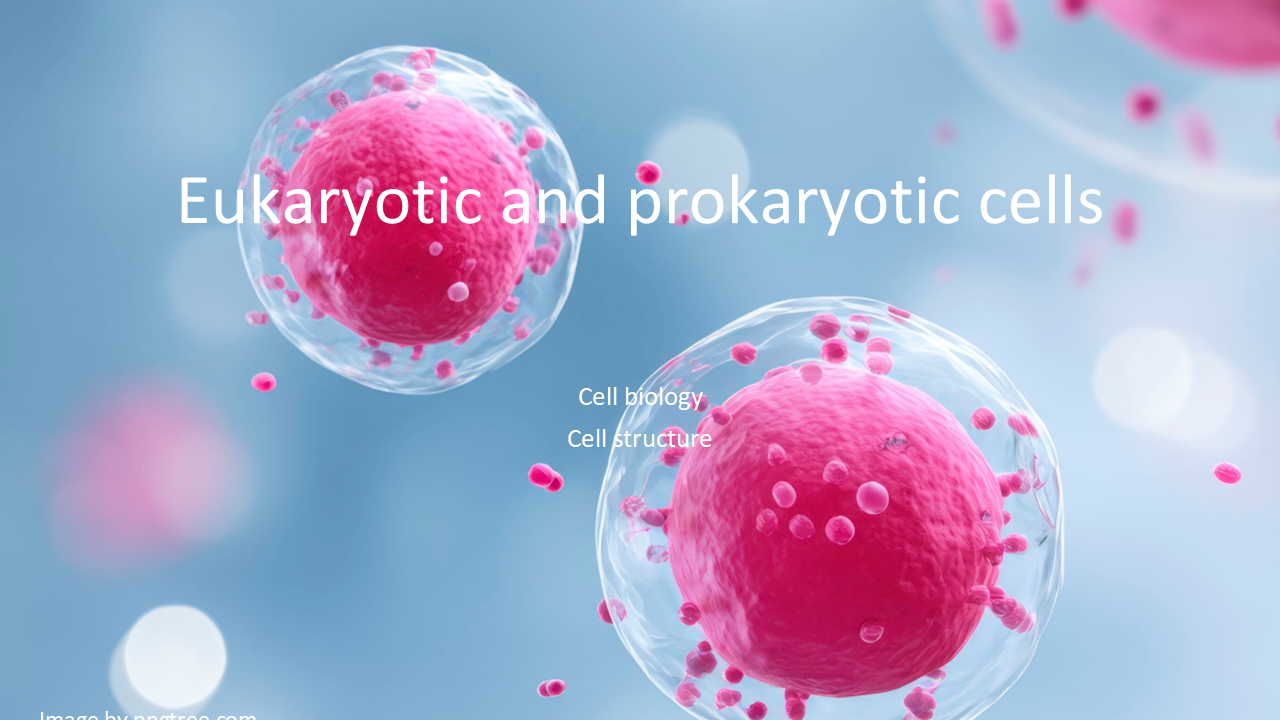
- 4.1.1.1Eukaryotic and prokaryotic cells
- 4.1.1.2Animal and plant cells
- 4.1.1.3Cell specialisation
- 4.1.1.4Cell differentiation
- 4.1.1.5Microscopy
- 4.1.1.6Culturing microorganisms
4.1.2 Cell division
4.1.3 Transport in cells
4.2 Organisation
4.2.1 Principles of organisation
4.2.2 Animal tissues, organs and organ systems
- 4.2.2.1aThe human digestive system
- 4.2.2.1bFood Tests (RP4)
- 4.2.2.1cEnzymes
- 4.2.2.1dEnzymes and digestion
- 4.2.2.1eInvestigating enzymes (RP5)
- 4.2.2.2aThe heart, including heart dissection
- 4.2.2.2bLung structure
- 4.2.2.2cBlood vessels
- 4.2.2.3The Blood
- 4.2.2.4Coronary heart disease
- 4.2.2.5Health issues
- 4.2.2.6Effect of lifestyle
- 4.2.2.7Cancer
4.2.3 Plant tissues, organs and systems
4.3 Infection and Response
4.3.1 Communicable diseases
- 4.3.1.1Communicable diseases
- 4.3.1.2Viral diseases
- 4.3.1.3Bacterial diseases
- 4.3.1.4Fungal disease
- 4.3.1.5Protist diseases
- 4.3.1.6Human defence systems
- 4.3.1.7Vaccination
- 4.3.1.8Antibiotics and painkillers
- 4.3.1.9Discovery and development of drugs
4.3.2 Monoclonal antibodies
4.3.3 Plant disease
4.4 Bioenergetics
4.5 Homeostasis and Response
4.5.1 Homeostasis
4.5.2 The human nervous system
- 4.5.2.1Human nervous system
- 4.5.2.2The brain
- 4.5.2.3The eye
- 4.5.2.4Control of body temperature (thermoregulation)
4.5.3 Hormonal coordination in humans
- 4.5.3.1Human endocrine system
- 4.5.3.2Control of blood glucose concentration
- 4.5.3.3Water balance, osmoregulation and the kidneys
- 4.5.3.4Hormones in human reproduction
- 4.5.3.5Contraception
- 4.5.3.6The use of hormones to treat infertility
- 4.5.3.7Negative feedback
4.5.4 Plant hormones
4.6 Inheritance, Variation and Evolution
4.6.1 Reproduction
- 4.6.1.1Sexual and asexual reproduction
- 4.6.1.2Meiosis
- 4.6.1.3Advantages and disadvantages of sexual reproduction
- 4.6.1.4DNA and the genome
- 4.6.1.5DNA Structure
- 4.6.1.6Genetic inheritance
- 4.6.1.7Inherited disorders
- 4.6.1.8Sex determination
4.6.2 Variation and evolution
- 4.6.2.1Variation
- 4.6.2.2Evolution
- 4.6.2.3Selective breeding
- 4.6.2.4Genetic engineering
- 4.6.2.5Cloning
4.6.3 The development of understanding of genetics and evolution
- 4.6.3.1Theory of evolution
- 4.6.3.2Speciation
- 4.6.3.3The understanding of genetics
- 4.6.3.4Evidence for evolution
- 4.6.3.5Fossils
- 4.6.3.6Extinction
- 4.6.3.7Resistant bacteria
4.6.4 Classification of living organisms
4.7 Ecology
4.7.1 Adaptations, interdependence and competition
- 4.7.1.1Communities (Organising an ecosystem)
- 4.7.1.2Abiotic factors
- 4.7.1.3Biotic factors
- 4.7.1.4Adaptations
4.7.2 Organisation of an ecosystem
- 4.7.2.1Levels of organisation, including RP9 Sampling
- 4.7.2.2How materials are cycled
- 4.7.2.3Decomposition, including RP10 Decay
- 4.7.2.4Impact of environmental change
4.7.3 Biodiversity and the effect of human interaction on ecosystems
- 4.7.3.1Biodiversity
- 4.7.3.2Waste management
- 4.7.3.3Land use
- 4.7.3.4Deforestation
- 4.7.3.5Global warming
- 4.7.3.6Maintaining biodiversity
4.7.4 Trophic levels in an ecosystem
4.7.5 Food production
Get in touch
Have a question about a resource, need help choosing the right one, or have an idea for something you’d like us to develop? Get in touch.